Nearly every wig on the market is sold as human hair, and nearly all of it is. The phrase is close to meaningless on its own. What separates a piece that still moves like hair after three years from one that mats after three months is what happened to the cuticle — and whether anyone bothered to keep the strands pointing the same way.
What a cuticle is
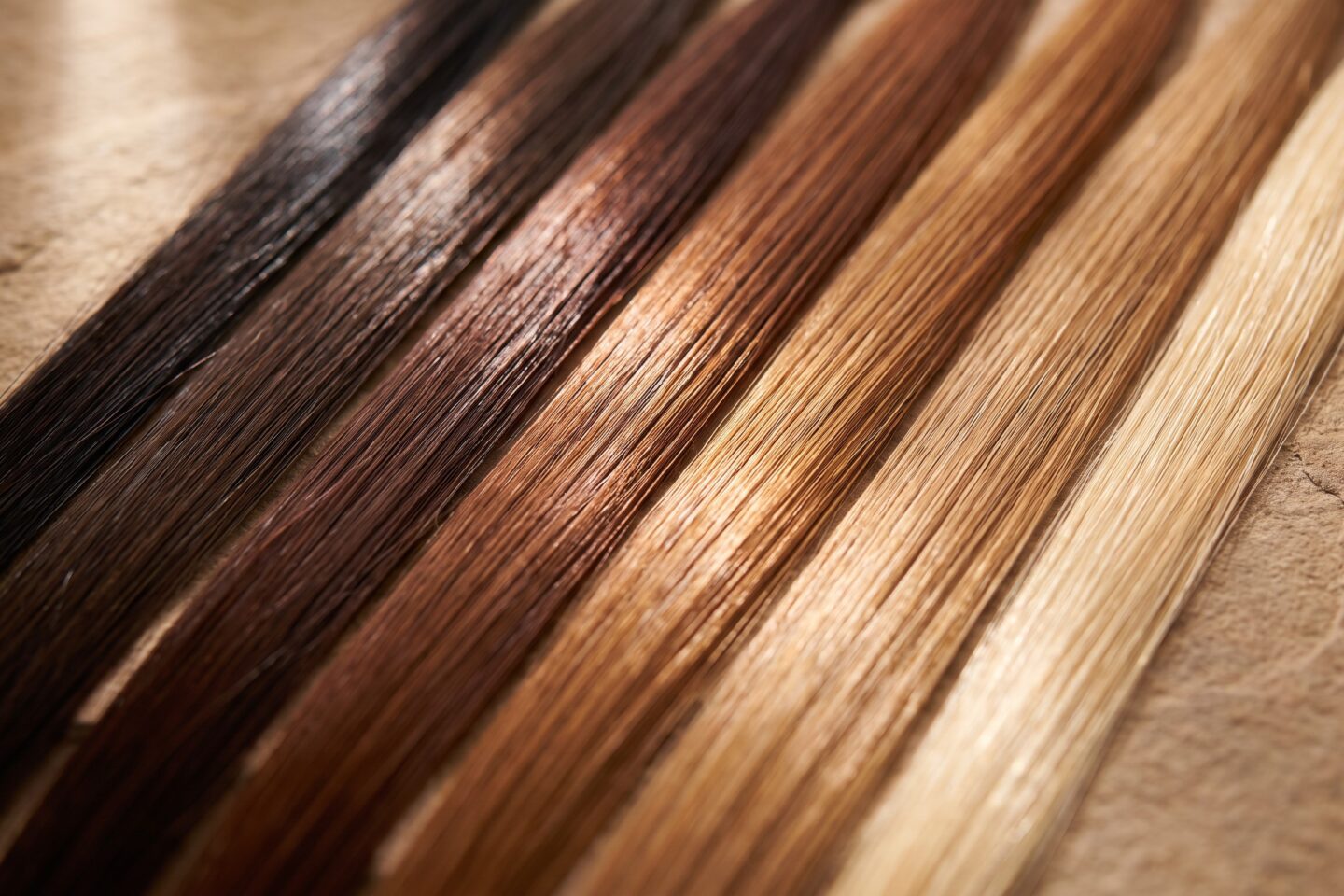
Each strand of hair is wrapped in overlapping scales, like tiles on a roof, all lying root to tip. That layer is the cuticle. It is what makes hair reflect light in one direction, take colour evenly, and slide past its neighbours instead of catching on them.
What usually happens to it
Collected hair arrives as a mix of directions. Sorting it strand by strand is slow and expensive, so the commodity process skips it: an acid bath strips the cuticle off entirely, which removes the problem of direction by removing the thing that made direction matter. The hair is then coated in silicone so it feels glossy in the packet.
It does feel wonderful, for a while. Then the coating washes off — usually somewhere between the sixth and tenth wash — and what is left is bare cortex with no scales to protect it. That is the point at which a piece starts to tangle at the nape, drink product without softening, and refuse to hold colour. It has not been damaged by you. It arrived that way, under a finish.
The alternative
Cuticle-aligned hair keeps its cuticle intact, and every strand is kept running root to tip in the same direction from collection through to knotting. It is slower, the yield is lower, and it costs more at every stage. What you get is hair that behaves like hair: it can be washed without a countdown, coloured by someone who knows what they are doing, and it does not develop that felted patch underneath.
Then it has to be tied
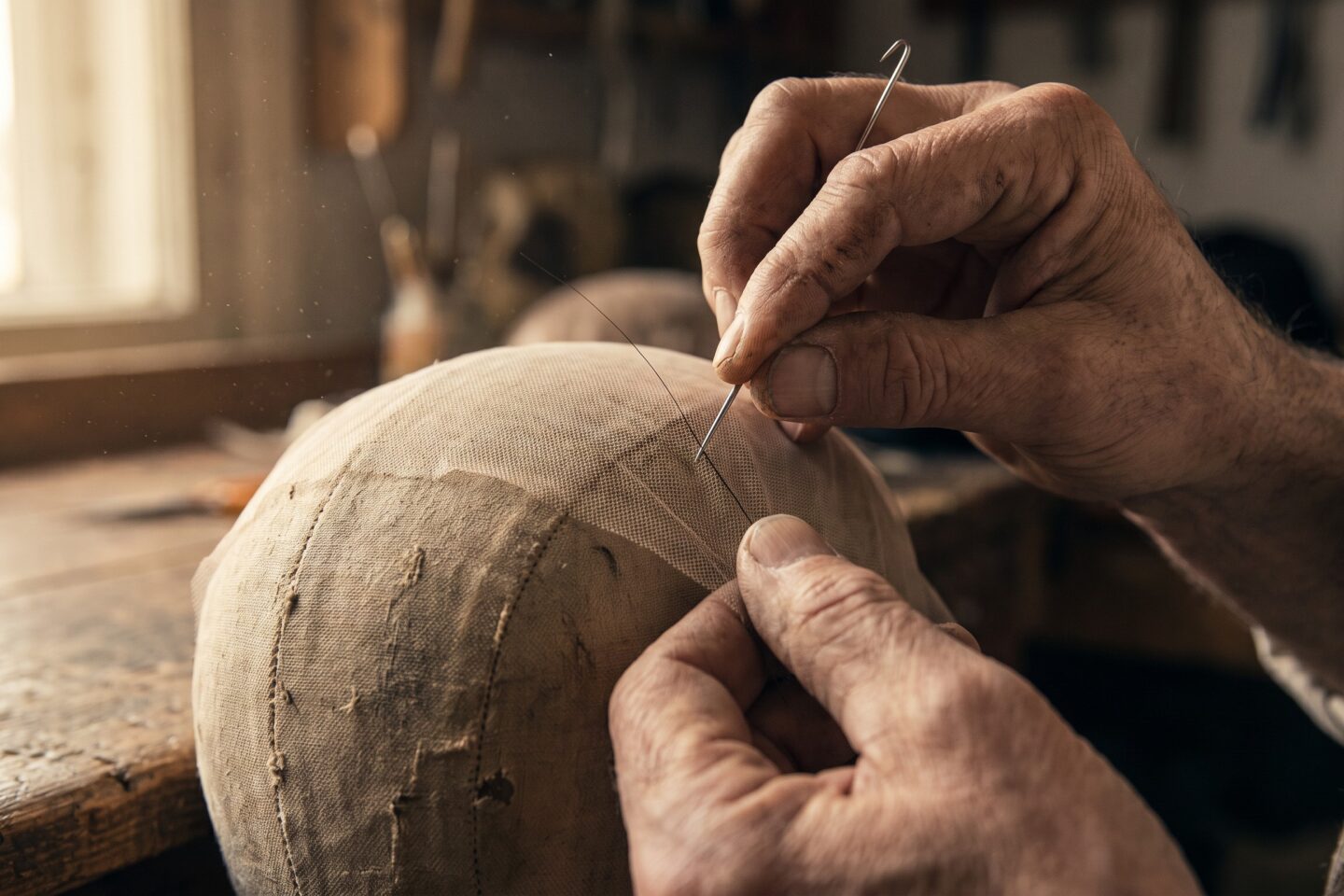
Aligned hair is only half of it. On a hand-tied piece, each strand is knotted individually into sheer Swiss lace with a ventilating needle — thousands of knots, one at a time. Machine wefts sew hair in as a curtain, which is fast and gives you a visible seam and a fixed direction of fall. Hand-tying gives every strand its own pivot point, so the hair moves from the base and falls in whatever direction you part it.
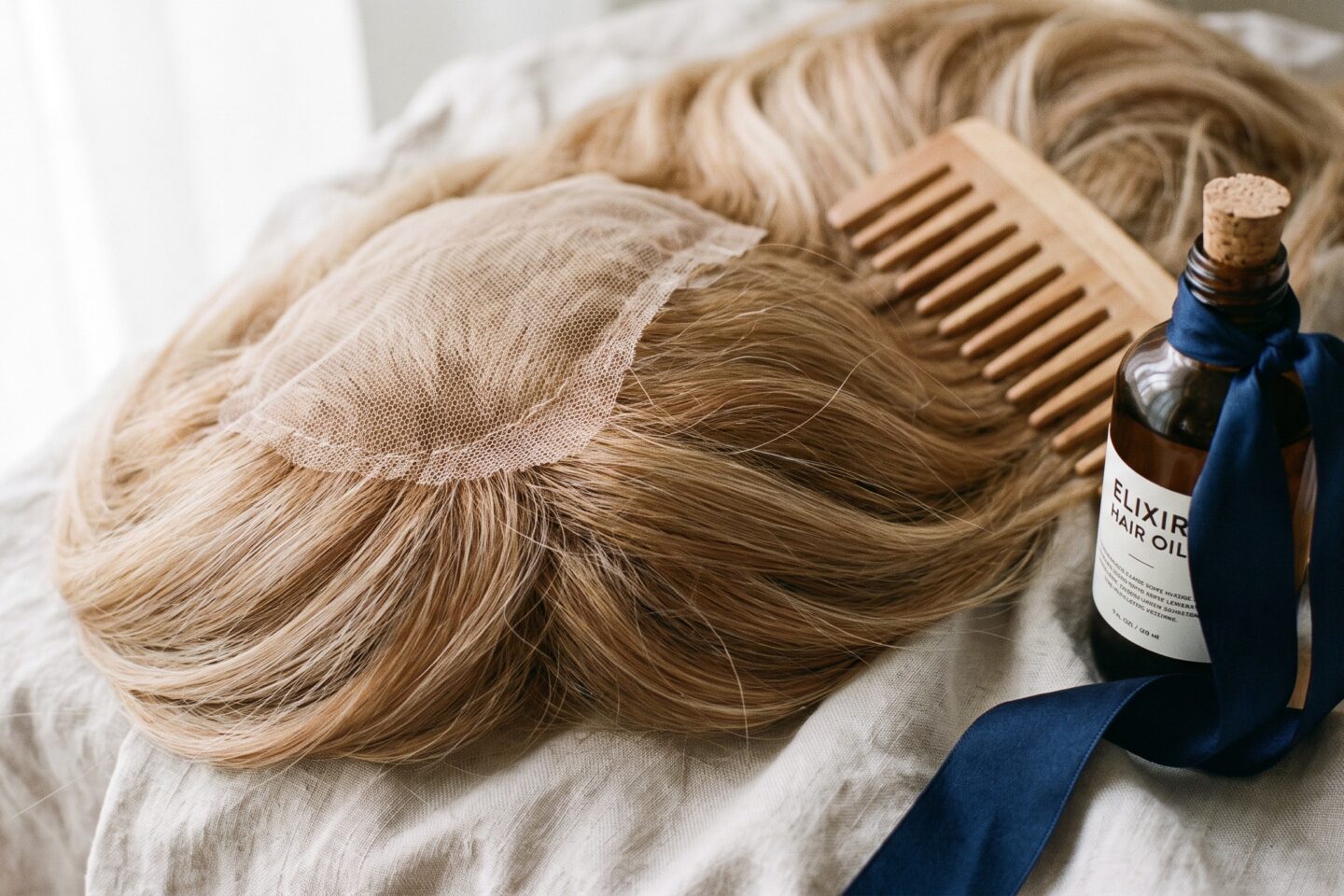
Swiss lace is chosen because it is fine enough to disappear against skin. A silk top adds a layer that puts the knots underneath a fabric scalp, so what shows at the parting reads as scalp rather than as knots. A lace top is lighter and more breathable; a silk top is the more undetectable of the two at close range. Neither is better in the abstract — they are answers to different questions.
Why it takes five to six weeks
Because none of the above can be rushed. Sorting, matching, knotting, and finishing to one set of measurements is work measured in days, not minutes, and the last of it happens after your order exists rather than before. A piece made this way is not sitting in a warehouse waiting for someone whose head it might fit.
That is the whole argument for the slow way. Not that it is precious — that it is still yours in year three.